Exit poll shows Rumen Radev’s Progressive Bulgaria party winning 38.1 percent of the vote.
Published On 19 Apr 2026
Former President Rumen Radev’s centre-left Progressive Bulgaria party is on course to win a parliamentary election, accoding to an exit poll published hours after voting closed.
Bulgarians cast their ballots on Sunday for the eighth time in five years after mass protests led to the removal of the previous conservative government in December.
Recommended Stories
list of 3 itemsend of list
While official results aren’t expected until Monday, an exit poll conducted by Sofia-based Alpha Research showed Radev’s Progressive Bulgaria winning 38.1 percent of the vote, the Reuters news agency reported.
Former Prime Minister Boyko Borissov’s conservative GERB was trailing in second place with 15.9 percent of the vote, the exit poll shows, while the reformist We Continue the Change-Democratic Bulgaria (PP-DB) coalition was projected to finish third with 14.1 percent. Radev said he would be willing to work with them, but that a minority government was also an option.
Borissov wrote in a post on Facebook that “Elections decide who comes first, but negotiations will decide who governs.”
Radev, a left-leaning eurosceptic, stepped down from the presidency after nine years in January to launch his bid to become prime minister. He backed the anti-corruption protests that saw hundreds of thousands of largely young people take to the streets in December, and promised to get rid of the “oligarchic governance model”.
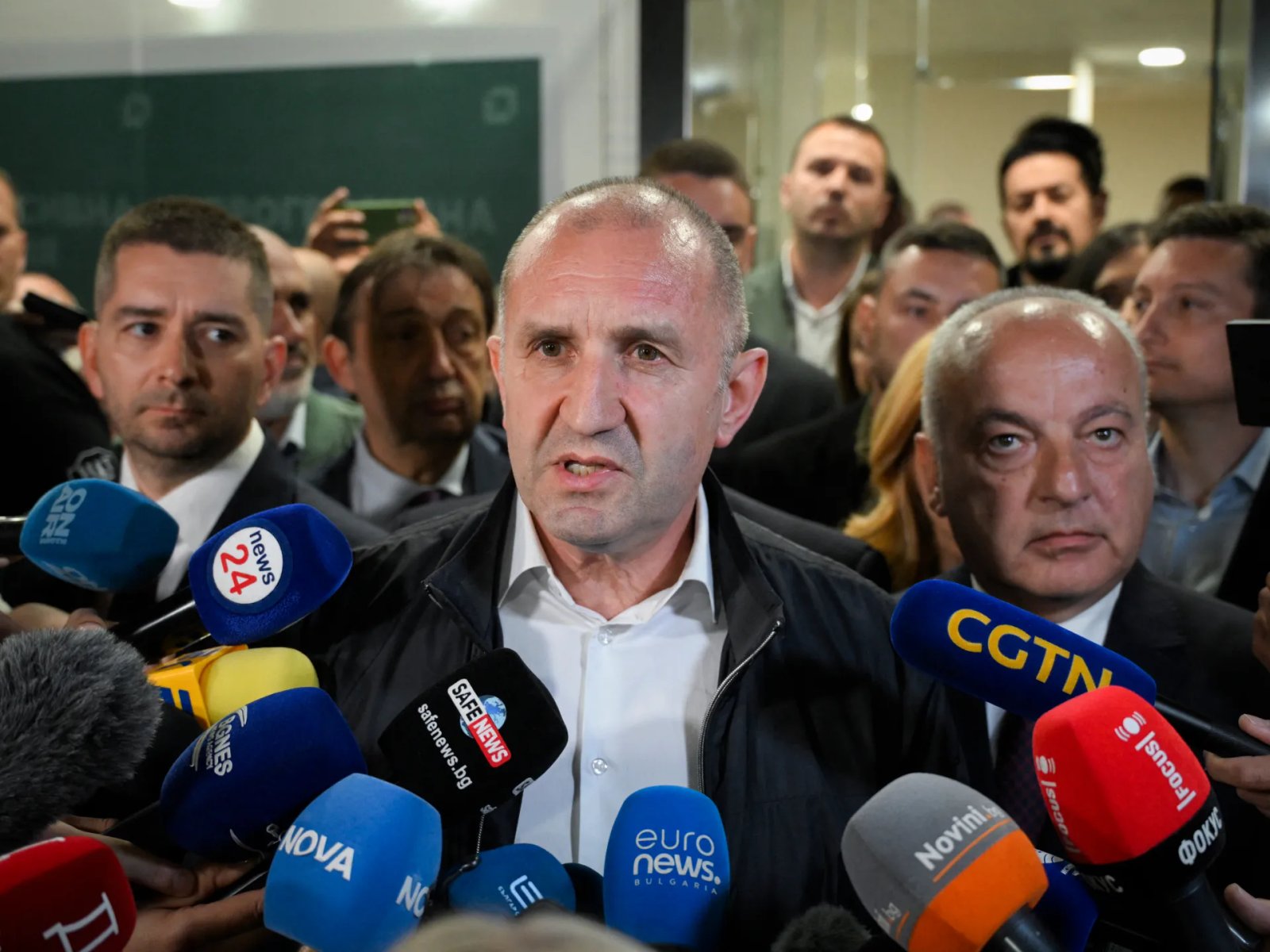
“We will do everything possible not to allow us to go [to elections] again. It is ruinous for Bulgaria,” Radev told reporters after the exit poll was released. “We are ready to consider different options so that Bulgaria can have a regular and stable government.”
The Balkan country has seen fragmented parliaments in recent years, with coalitions failing to last more than a year since 2021.

Radev has called for renewing ties with Moscow and criticised supplying Ukraine with weapons in its war to fend off Russia’s invasion. He also opposed the 10-year defence agreement signed between Bulgaria and Ukraine in March, and has been accused by critics of being too pro-Russian.
Bulgaria’s election comes in the wake of Hungary’s Viktor Orban’s defeat last week after 16 years in power. The right-wing prime minister lost to Péter Magyar’s Tisza centre-leaning opposition party, which swept 70 percent of the seats in parliament in a landslide.
Bulgaria joined the European Union in 2007, and adopted the euro as its currency in January this year.