HOUSTON — As the Artemis II astronauts make their way inexorably back toward Earth, with splashdown scheduled for April 8, scientists on the ground are already poring over the data taken during a historic flight around the moon.
“Spirits are very high,” Artemis II lunar science lead Kelsey Young said during an April 7 news briefing. There’s a “very excited science community” at NASA’s Johnson Space Center.
The four Artemis II astronauts, NASA’s Reid Wiseman, Christina Koch and Victor Glover and the Canadian Space Agency’s Jeremy Hansen, made the first flyby of the moon in more than 50 years on April 6. The crew spent about seven hours taking carefully choreographed science observations, with two astronauts at a time poised at the windows of the Orion spacecraft taking photos and making recordings while the other two communicated with the ground.
The astronauts, who had prepared for the mission with extensive science and geology training, regularly called down to mission control with science “sit reps,” or situational reports. The crew’s evocative descriptions of lunar features included handprints, pinpricks of light shining through a lampshade, islands in a sea of darkness, deep holes, a healing wound, a frozen choppy sea and a dinosaur footprint.
“We trained them to describe it like they see it,” Young said.
But for scientists, the best may be yet to come. The thousands of photos and audio recordings of detailed observations are still being relayed from the spacecraft back to Earth, and scientists are debating what they mean.
“There’s a lot of science inside of those images,” Young said.
Here’s a tantalizing hint at the treasure those data may hold.
Impact flashes
One of the things scientists are most excited about is the astronauts’ observations of impact flashes. These brief blinks of light are caused by micrometeorites smacking into the darkened lunar surface.
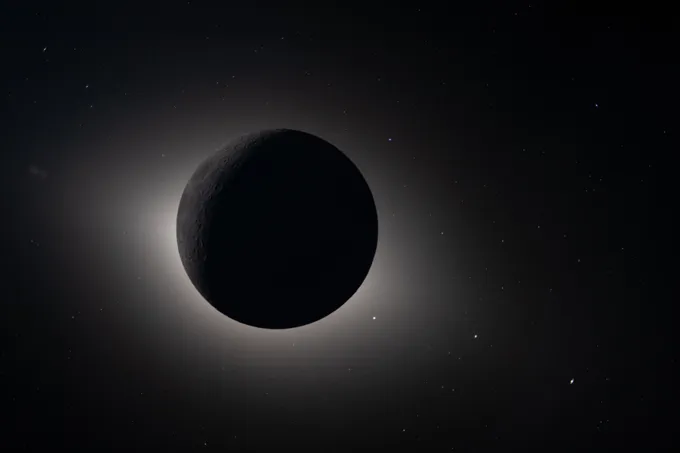
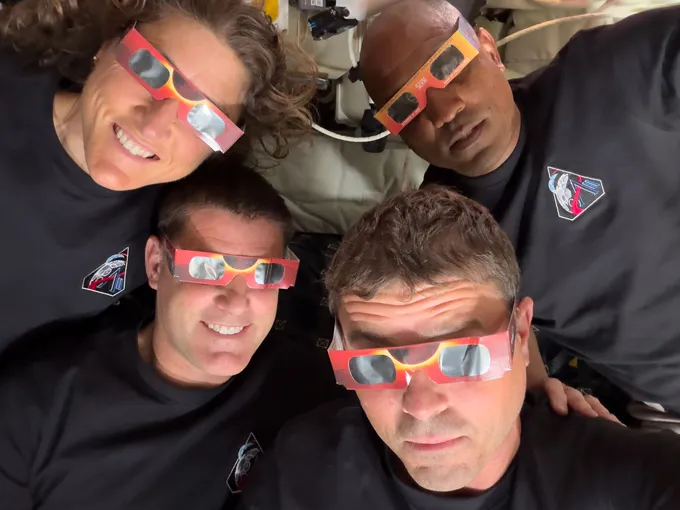
Near the end of the flyby, the crew oriented the spacecraft so that the moon blocked the sun from the astronauts’ perspective for almost an hour, creating a solar eclipse. If any impact flashes were going to show up, it would have been then.
“I don’t know if I expected to have the group see any on this mission,” Young said.
But the astronauts reported seeing flashes as soon as they intentionally looked for them.
“The eclipse occurred, and then we had five minutes of human emotional reaction to staring at that orb floating in the vastness of space,” said mission commander Reid Wiseman in a teleconference with the science team earlier on April 7. “Then right after that, somebody in the cabin said ‘Let’s look for impact flashes,’ and immediately we saw one or two or three.”
Some of the flashes reported may have been duplicates, two astronauts seeing the same thing. But the crew think they saw at least four and as many as six in a 30-minute period.
“You probably saw the surprise and shock on my face,” Young said during the news briefing. “And though I was not in the Science Evaluation Room, I heard there were audible screams of delight.”
The astronauts described the flashes as colorless pinpricks of light that lasted a few milliseconds, sending details on when and where they saw the flashes on the moon. Observations from the ground and from NASA’s Lunar Reconnaissance Orbiter are looking for evidence of the same flashes. LRO may be able to see any new craters formed from the impacts.
That would be cool, but it’s also important information for planning future missions. When astronauts are on the surface of the moon, those micrometeorites will be falling on their heads and habitats. Knowing how frequent they are and how much damage they could do will help keep future astronauts safe.
Seeing in colors
One key advantage human astronauts have over robotic space explorers is sensitivity to color. Human eyes can pick up subtle shifts in colors and brightness that cameras simply can’t.
“I was eagerly awaiting if they saw any other colors than black, white, shades of gray,” Young said. “They did indeed, right away.”
The astronauts described green hues around the bright Aristarchus crater. Elsewhere, the moon looked brown.
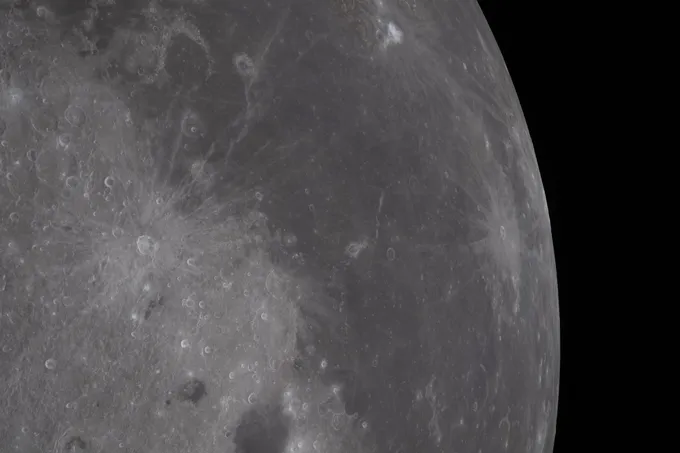
“These colors really help tell us nuances about the chemistry of lunar material,” Young said.
The astronauts also described surprising ways that other things interfered with their color perception. When the Earth was in their field of view, it changed the way the moon looked, Glover reported. The difference between Earth and the moon was like “the difference between an LED display and a painting, you can do things with light that you can’t do with paint colors,” he said. “The Earth looked out of place. And it continued to dim the albedo [ or brightness] and color that was earlier apparent in the moon.”
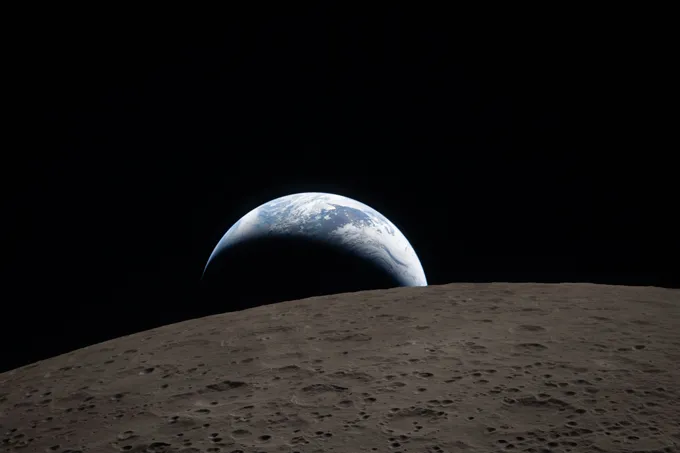
Koch agreed. “The moon turned into a sponge of light,” she said. “As soon as the Earth got close enough to be in my field of view to take them both in at the same time, [the moon] dulled, it turned into a sponge, it’s almost like it went matte.” It also looked more like an olive brown, where before “I would have said it was electric gray.”
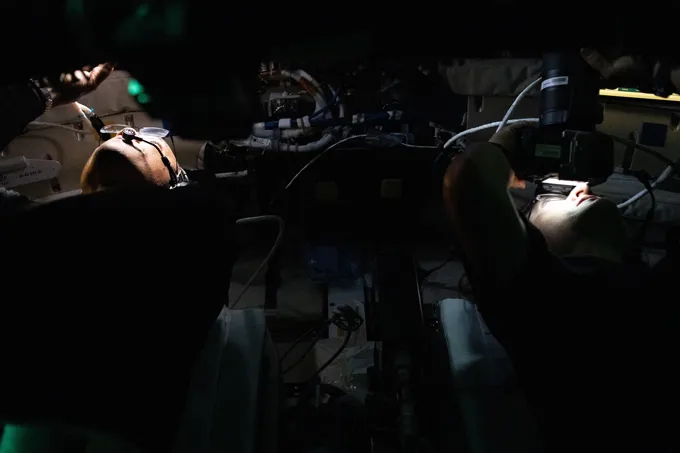
Things inside the spacecraft itself, like orange Kapton tape or a white Abort sticker, also made it difficult to observe the moon. At one point Koch asked Wiseman to help her cover things in the capsule with a black t-shirt so they didn’t reflect in the windows. She suggested sending a darkroom cloth or similar as part of future missions’ kit.
“A geologist’s cheat code”
Another place where the astronauts saw colors was in and around impact craters. Impact craters are “kind of like a geologist’s cheat code,” Young said, because they can dig material up from great depths that you couldn’t access otherwise.
Early in the flyby the crew suggested new names for two small craters: Integrity, their moniker for their spaceship, and Carroll, after Commander Wiseman’s late wife. The team will submit the names to the International Astronomical Union when they return to Earth to make them official.
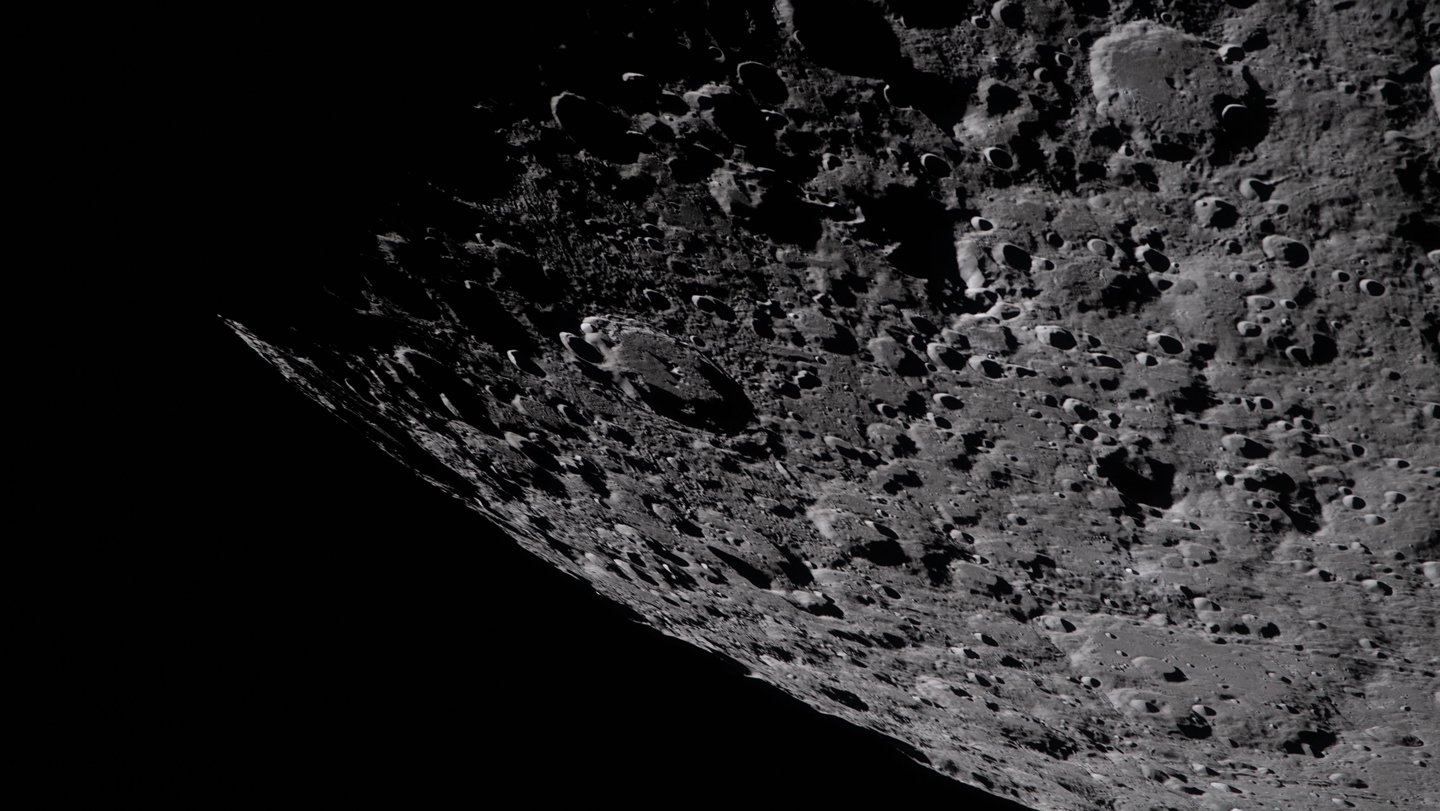
In their post-flyby science conference with mission control, the astronauts had an extended discussion about rays of bright material extending from Ohm crater, an impact crater with a flat floor interrupted by central peaks. Scientists think those peaks mean that lunar rock liquified on impact and splashed upward like water in a pond.
“That has a lot of implications for future Artemis missions and hardware and impacts on color,” Young said.
The astronauts noticed that the rays varied in color and brightness, and contrasted with darker material around them. That suggests the rays could be made of material that had been excavated from deep below the surface of the moon and sprayed on top of older material.
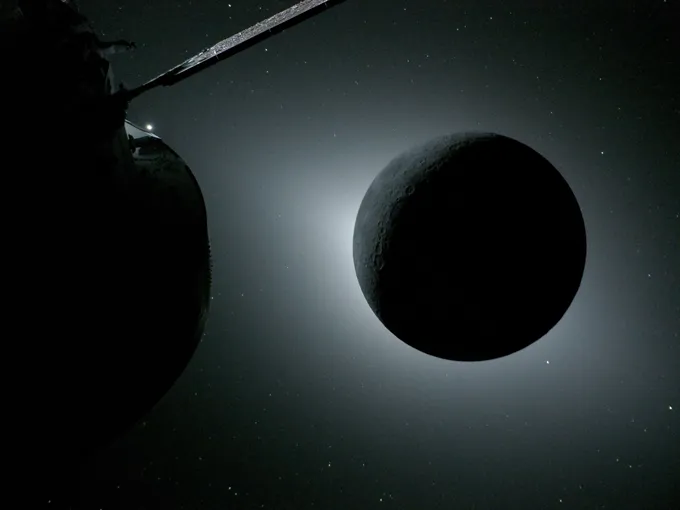
Glover reported seeing layers in the crater wall itself, and that the floor of the crater was the same color as the outside surface but a different color than the wall.
“It’s those kinds of nuanced observations that could ultimately inform future landed missions, future crewed missions, to understand where can we go to maximize the scientific value,” Young said. “These ultimately get at the chronology of the solar system.”
It was clear that future missions were on everyone’s minds. During the eclipse the astronauts were able to see other planets lined up in the darkness. One astronaut noted that one of them looked red.
“That’s Mars,” said Young. “You’re looking at your future.”