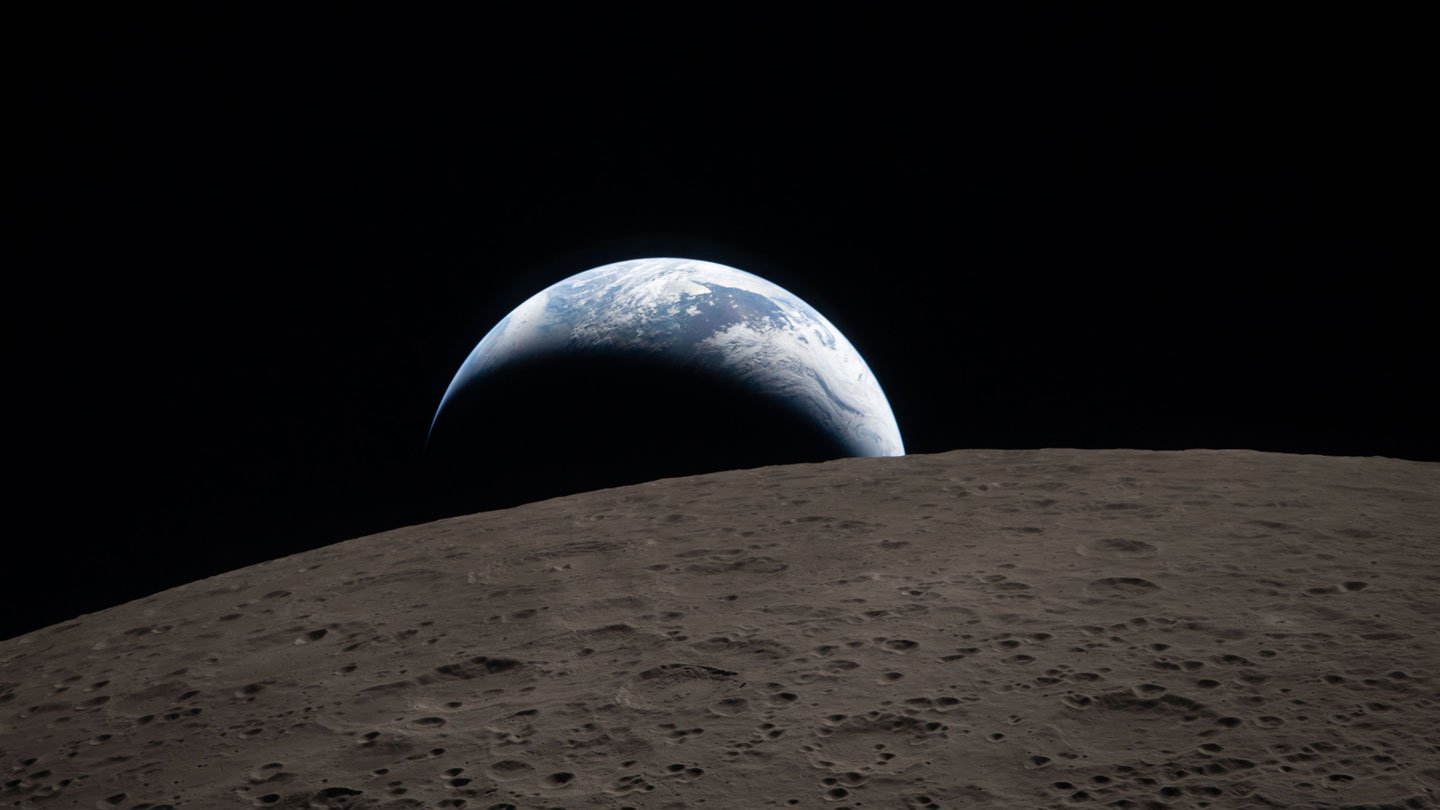
Just before temporarily losing contact with Earth on April 6, the Artemis II astronauts took this stunning photo of their home planet setting behind the moon.
The image is a deliberate echo of the 1968 “Earthrise” photo, taken by Apollo 8 astronaut William Anders as he became one of the first people to enter lunar orbit. That photo was spontaneous; Anders was surprised by the sight of Earth appearing over the rugged moon and rushed to a window to snap pictures. The image became one of the most famous photos in history and is partially credited with starting the environmental movement.
In contrast, this “Earthset” picture was carefully planned. Earth appears as a crescent, with clouds swirling over Australia and Oceania on the sunlit sliver.
The moon’s cratered surface has a brownish tint. The astronauts talked a lot about unexpected colors on the moon during their seven-hour flyby. “The more I look at the moon, the browner and browner it looks,” one noted.
About an hour after this photo was taken, the astronauts reemerged on the other side of the moon to begin their journey home.
“Ultimately, we will always choose Earth,” astronaut Christina Koch said. “We will always choose each other.”
Goodnight, Earth
Watch as Earth sets over the horizon of the moon.
-
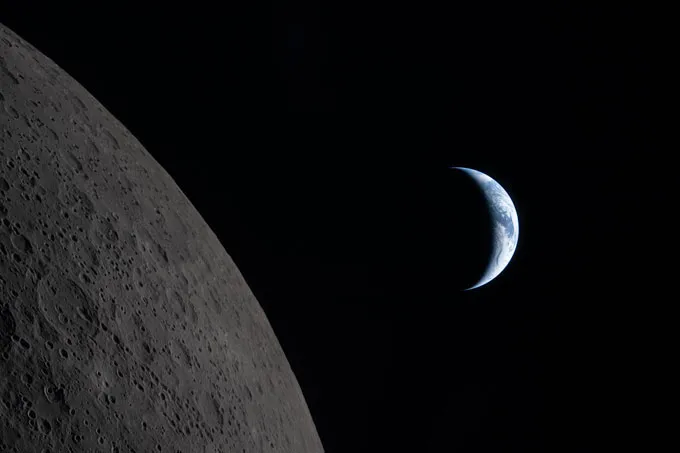
The moon and Earth edged closer six minutes before the moon covered Earth from from Artemis II’s point of view. NASA -
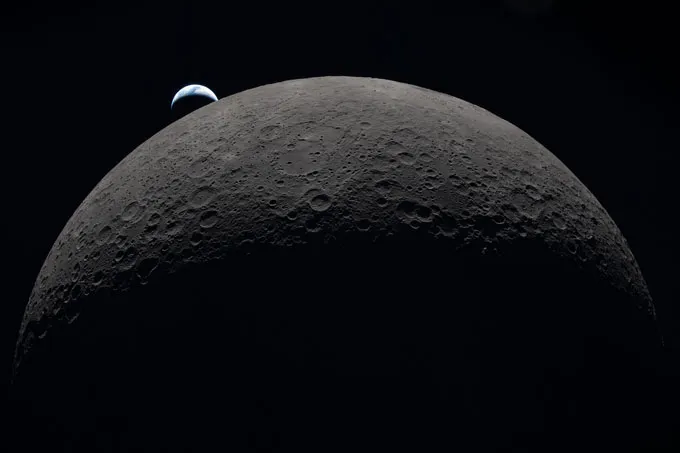
As Earth set, the moon’s craters are etched in stark relief. The Artemis II astronauts were the first humans to see these features and more on the lunar farside with their own eyes. NASA