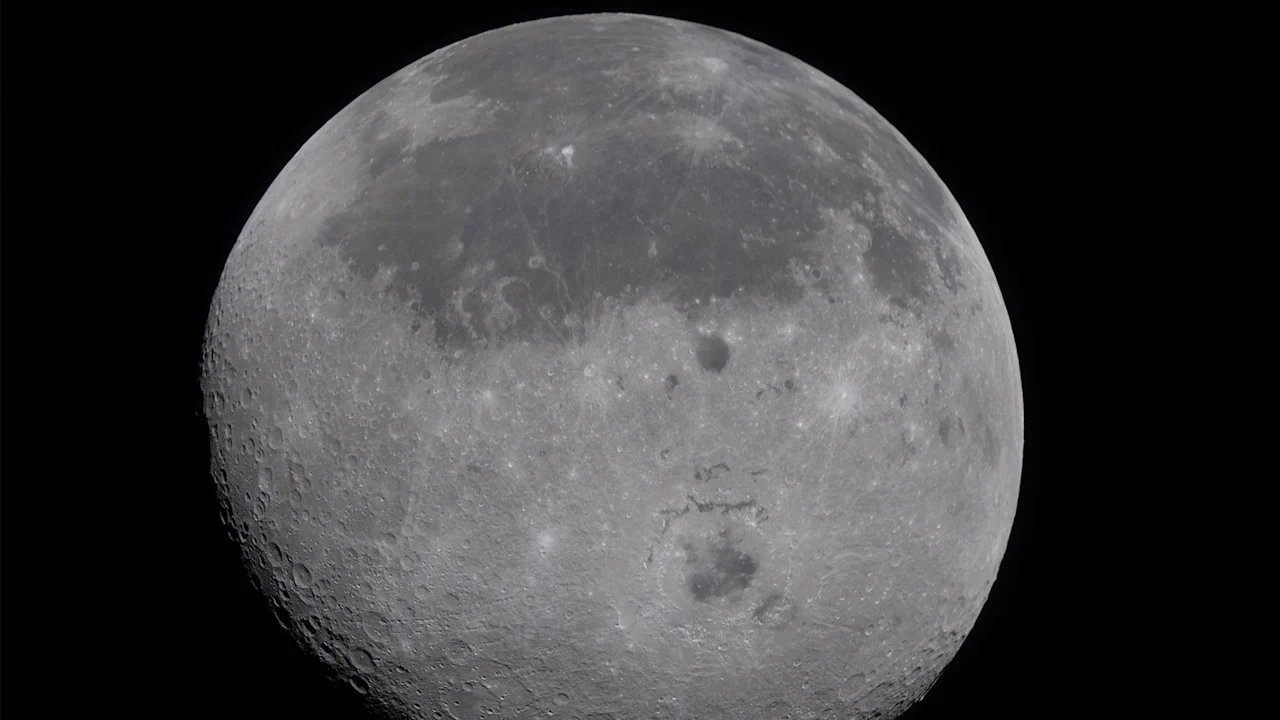
Artemis II is headed back to Earth after an intense observation period of the moon that lasted seven hours.
After traveling deeper into space than any other humans, the Artemis II astronauts pointed their moonship toward home Monday night, wrapping up a lunar cruise that revealed views of the far side never beheld by eyes until now.
Their flyby of the moon — NASA’s first return since the Apollo era — even included some celestial sightseeing besides yielding rich science. It was a significant step toward landing boot prints near the moon’s south pole in just two years.
A total solar eclipse greeted the three Americans and one Canadian as the moon temporarily blocked the sun from their perspective. Mercury, Venus, Mars and Saturn nodded at them from the black void. The landing sites of Apollo 12 and 14 also were visible, poignant reminders of NASA’s first age of exploration more than half a century ago.
In an especially riveting retro throwback, Artemis II shattered the distance record set by Apollo 13 in 1970. NASA’s Orion capsule reached a maximum distance of 252,756 miles (406,771 kilometers) from Earth before hanging a U-turn behind the moon, 4,101 miles (6,600 kilometers) farther than Apollo 13.
“It is blowing my mind what you can see with the naked eye from the moon right now. It is just unbelievable,” Canadian astronaut Jeremy Hansen radioed. He challenged “this generation and the next to make sure this record is not long-lived.”