NASA’s Artemis II crew experience total solar eclipse from space
From the perspective of the Orion capsule, the moon will fully block the sun’s disk for nearly an hour
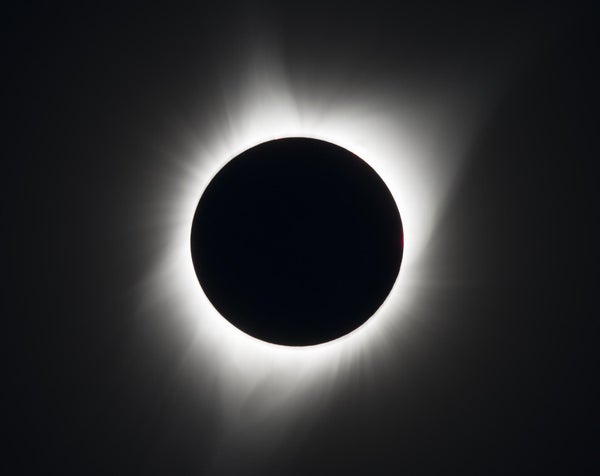
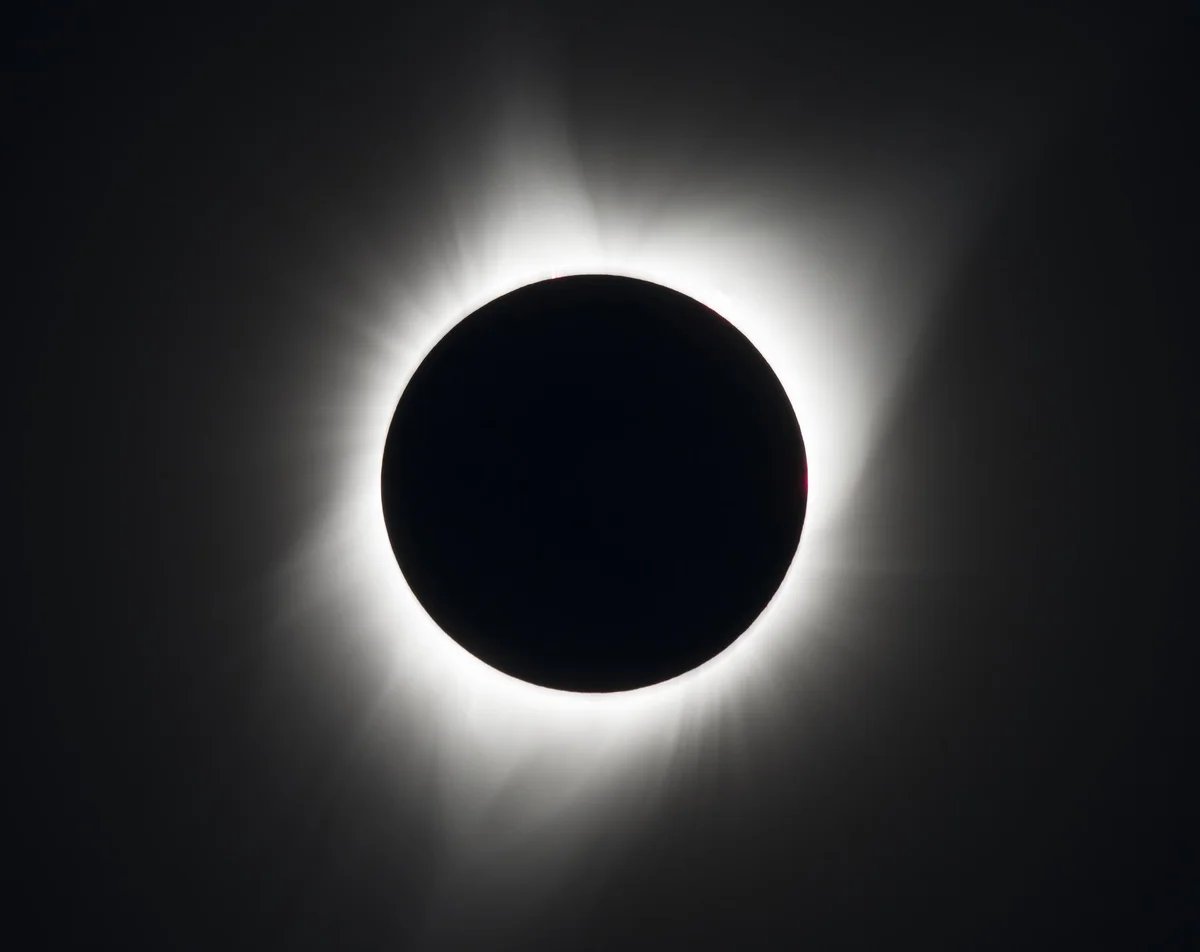
A total solar eclipse as seen from Oregon in 2017. The eclipse Artemis II sees will not look like this.
NASA has launched four astronauts on a pioneering journey around the moon—the Artemis II mission. Follow our coverage here.
Most people never get to experience a total solar eclipse, when the moon blots out the disk of the sun and reveals its fiery outermost atmospheric layer, or corona.
But astronauts are not most people, so perhaps it’s only fitting that the four crew members of NASA’s Artemis II mission were treated to a spectacle no human has ever experienced before—a total solar eclipse as seen from just a few thousand miles above the moon.
“Seconds after the sun set behind the moon, you can see Earthshine,” NASA astronaut Victor Glover told Mission Control, calling the moon “a black orb.” “Earth’s so bright out there.”
On supporting science journalism
If you’re enjoying this article, consider supporting our award-winning journalism by subscribing. By purchasing a subscription you are helping to ensure the future of impactful stories about the discoveries and ideas shaping our world today.
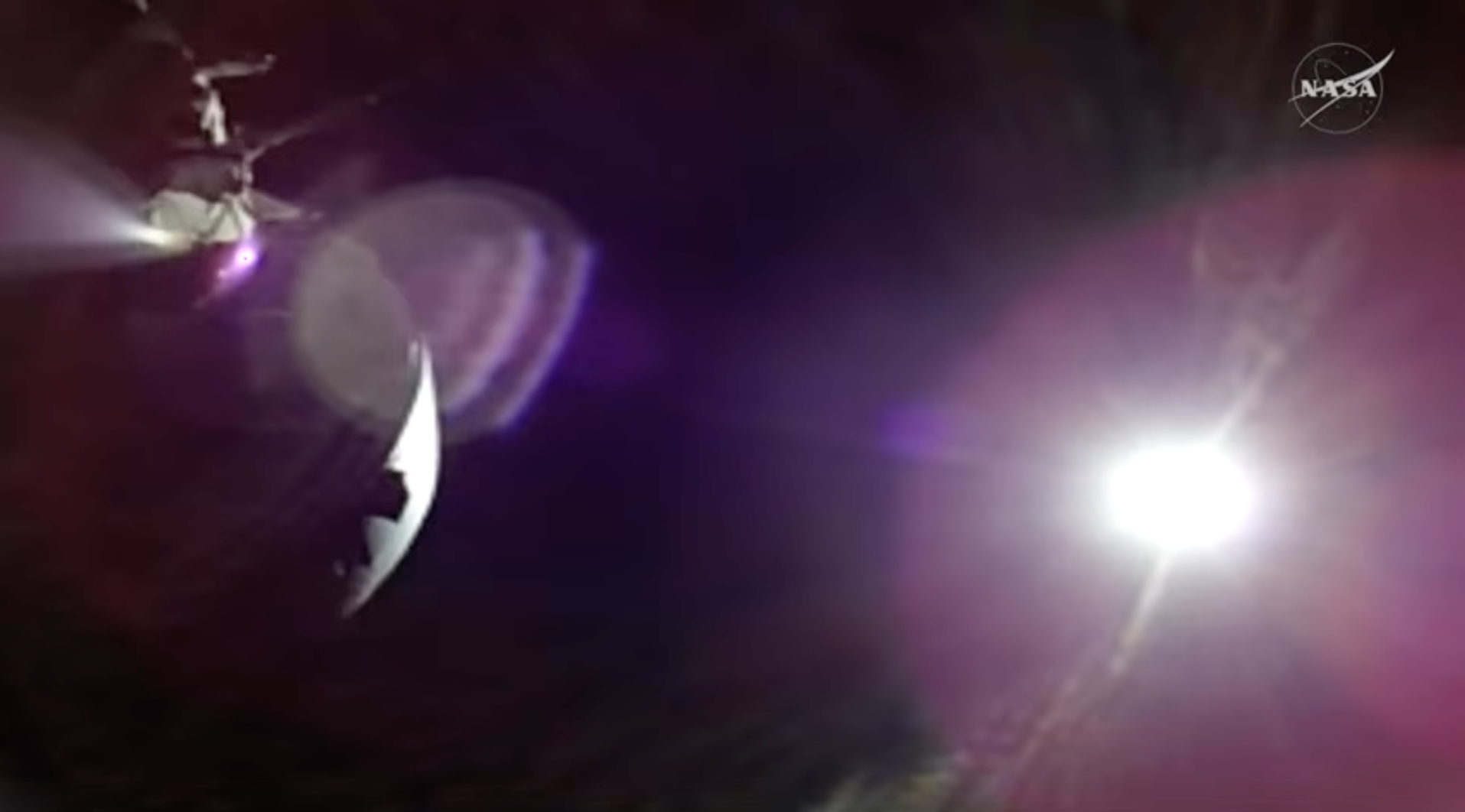
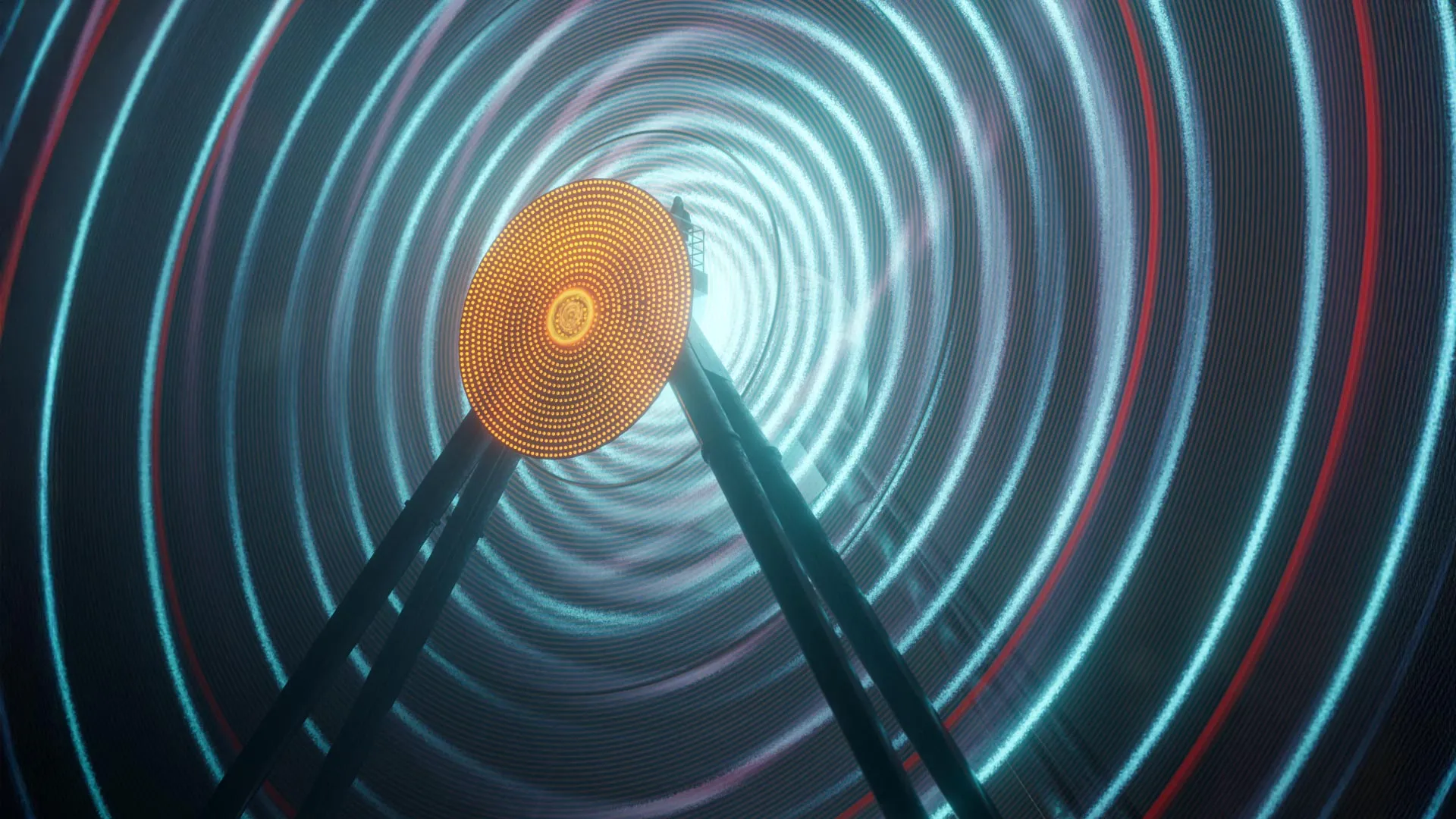
An image from the tip of one of Orion’s solar arrays as the capsule approaches a total solar eclipse.
And this wasn’t like a typical terrestrial total solar eclipse. As seen from the mission’s Orion spacecraft, the moon entirely hid our star for most of the eclipse’s duration, making this event unfold very differently from those on Earth. “It’s a really unique way to view an eclipse,” says Kelsey Young, a planetary scientist at NASA’s Goddard Space Flight Center and lunar science lead for the Artemis II mission at the agency’s Science Mission Directorate.
From Earth, total solar eclipses are spectacular thanks to a cosmic coincidence: even though the sun is about 400 times larger than the moon, the two appear about the same size in our skies because the sun is also about 400 times farther away than our natural satellite. When the two bodies align in our skies, the moon blocks the entire visible disk of the sun, allowing its wispy or corona to shine for a few minutes.
But what did the Artemis II crew—NASA astronauts Reid Wiseman, Glover, and Christina Koch and Canadian Space Agency astronaut Jeremy Hansen—experience during their unique in-flight eclipse?
Perhaps the starkest difference was how long the entire event took to unfold. Even the buildup was lengthy: Artemis II’s total eclipse began as the dramatic culmination of about six hours of intensive scientific observations of the moon by the crew. On Earth, lucky eclipse watchers experience a few minutes of totality, when the sun’s disk will be fully blocked by the moon. Inside Orion, totality lasted an incredible 57 minutes, from 8:35 P.M. EDT until 9:32 P.M. EDT.
The astronauts thoroughly enjoyed the experience. “I know this observation won’t be of any scientific value, but I’m really glad we launched on April first,” Glover said, referencing the launch date needed to experience the eclipse. “Humans probably have not evolved to see what we’re seeing. it is truly hard to describe. It is amazing.”
Wiseman agreed. “It’s just it’s indescribable. No matter how long we look at this, our brains are not processing this image in front of us,” he said. “It is absolutely spectacular, surreal. There’s no adjectives. I’m going to need to invent some new ones to describe what we are looking at out this window.”
Here’s how the event unfolded. Before and after totality, when any portion of the sun’s disk is visible, eclipse chasers on the Earth and in space alike must use special eclipse glasses to protect their eyes. The crew received a reminder about this necessity during the brief call with Young before flyby operations began and again as the eclipse reached its end.
For a few minutes at each end of that window, the moon’s edge appeared to align with that of the sun, blotting out the star’s fierce light and revealing the wispy corona off to one side. This was be the crew’s chance to spot coronal features such as streamers and plumes, which can help scientists understand the activity of the sun’s magnetic field.
The astronauts also looked for dust lofted off the moon’s surface and silhouetted against the faint coronal light. Absent erosion from water and wind, lunar dust is composed of tiny, sharp, glassy fragments of rock that the sun’s radiation can electrostatically charge, lifting the fragments away from the surface. That means moon dust is hazardous to humans and machinery alike and tends to get everywhere, so understanding the dust and its levitation is a top priority for facilitating future exploration of the lunar surface. A few Apollo astronauts reported seeing lofted dust from orbit, so NASA hoped the Artemis II crew may have the same luck.
“Not a lot of Apollo crew members saw that, so while we have guesses, we’re just looking forward to hearing what the crew can tell us,” Young tells Scientific American. “We don’t know what they will see.”
Between the so-called sunset and sunrise of the eclipse, the astronauts enjoyed a long stretch when the sun was fully blocked from view. During this period, the crewed peer at the moon in search of earthshine, the faint light reflected off our planet onto the lunar surface, as well as the flashes of light caused by micrometeoroid impacts, of which they saw at least five. The astronauts also turned their cameras to the cosmos at large: Venus, Mars, Saturn and Mercury were all in Orion’s line of sight, Young says, as well as a range of constellations.
Throughout the eclipse, the astronauts searched for a second type of dust as well, this time in the form of zodiacal light, which is caused by sunlight reflecting off interplanetary dust. Such light was on display in an early image of Earth that was shared by the Artemis II crew, but scientists hoped for additional observations as well.
There had been hopes that the Artemis II crew might also be able to see Comet C/2026 A1 (MAPS) during the eclipse, but the dirty ice ball didn’t survive its close approach of the sun on April 4.
Although the Artemis II crew’s solar eclipse experience lasted much longer than a terrestrial one, in time, it, too, ended. Once again, the sun that sustains all of us appeared—first, its wispy corona and then the stunning brilliance of its disk.
Editor’s note (4/6/26): This is a developing news story and will be updated.