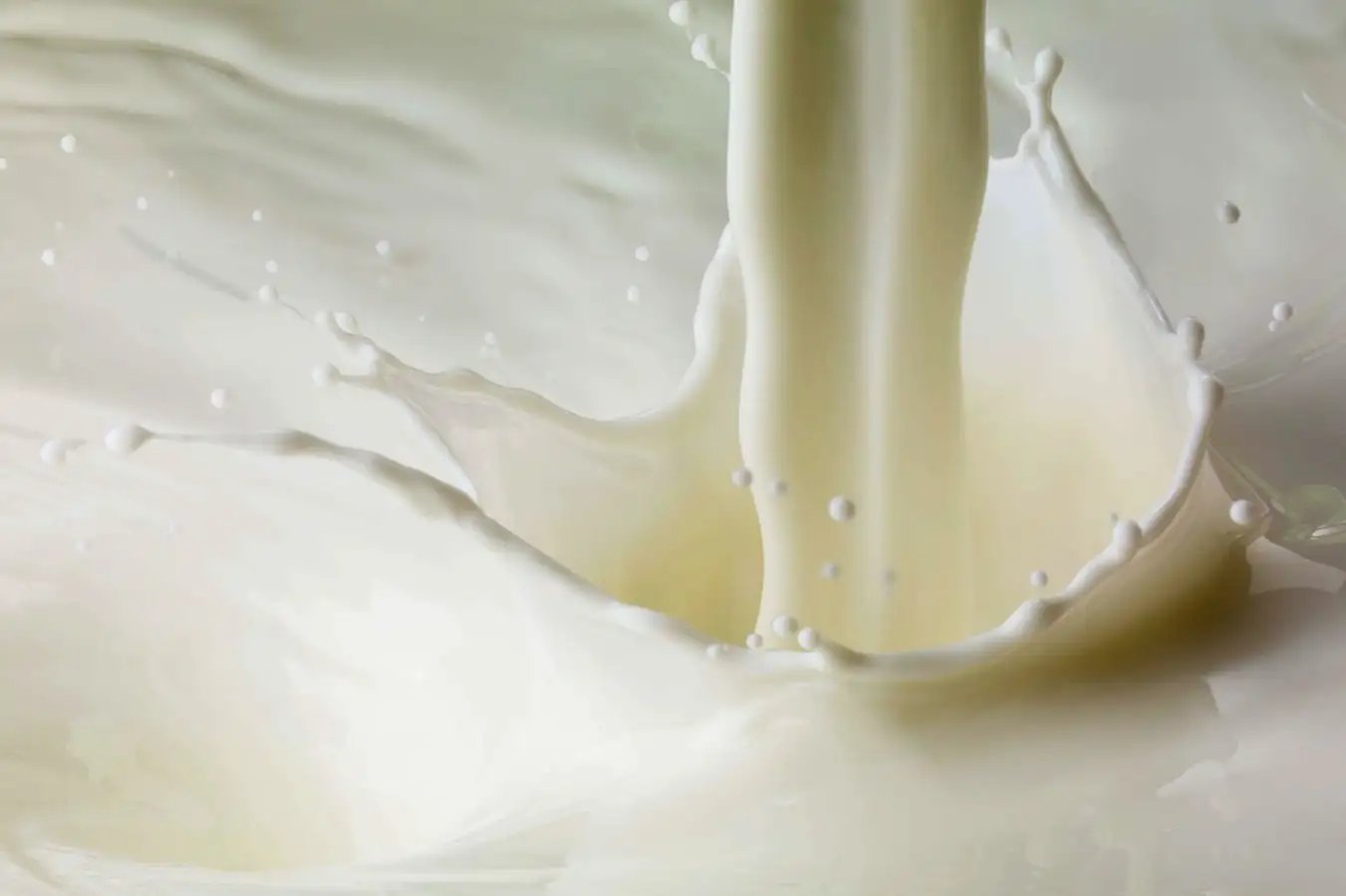
Just a splash of the non-Newtonian, please
Jack Andersen/Getty Images
The physics of plant-based milks is strange. Researchers are only now beginning to understand it, and they hope that doing so could result in better beverages.
Vivek Sharma at the University of Illinois Chicago and his colleagues found that most plant milks flow and drip in more complex and unusual ways than their animal counterparts.
The team looked at eight different milks – cow, goat, pea, soy, oat, almond, coconut and rice – and studied their viscosity, or how difficult it is for them to flow. They found that all the plant-derived milks except for rice milk exhibited something called shear thinning, where the viscosity decreases with pressure.
That means those milks are non-Newtonian liquids, physically more similar to ketchup or shampoo, which flow more easily when you apply pressure to the bottle than cow or goat milk, which have a constant viscosity.
Sharma says this is because the plant milks contained very small amounts, often less than 0.1 per cent, of gums derived from either legumes or bacteria. These gums make them more shelf-stable and give them a creamier mouthfeel.
The non-Newtonian nature of these milks also affects how people interact with them every day, says Sharma. For instance, droplets of shear-thinning plant milk will spread more if spilled on a kitchen counter, while a cookie dipped into a glass of such milk would get a thinner coating.
The researchers believe that by studying the physics of the different properties of milks and the ingredients they contain, it should be possible to design new drinks with all the desired traits. Seasoned food scientists may have remarkable empirical knowledge and intuition for tweaking milks, but they rarely work with rigorous physical models or measurements, says Sharma.
Sharma presented the work on 18 March at the American Physical Society Global Physics Summit in Denver, Colorado.
Topics: